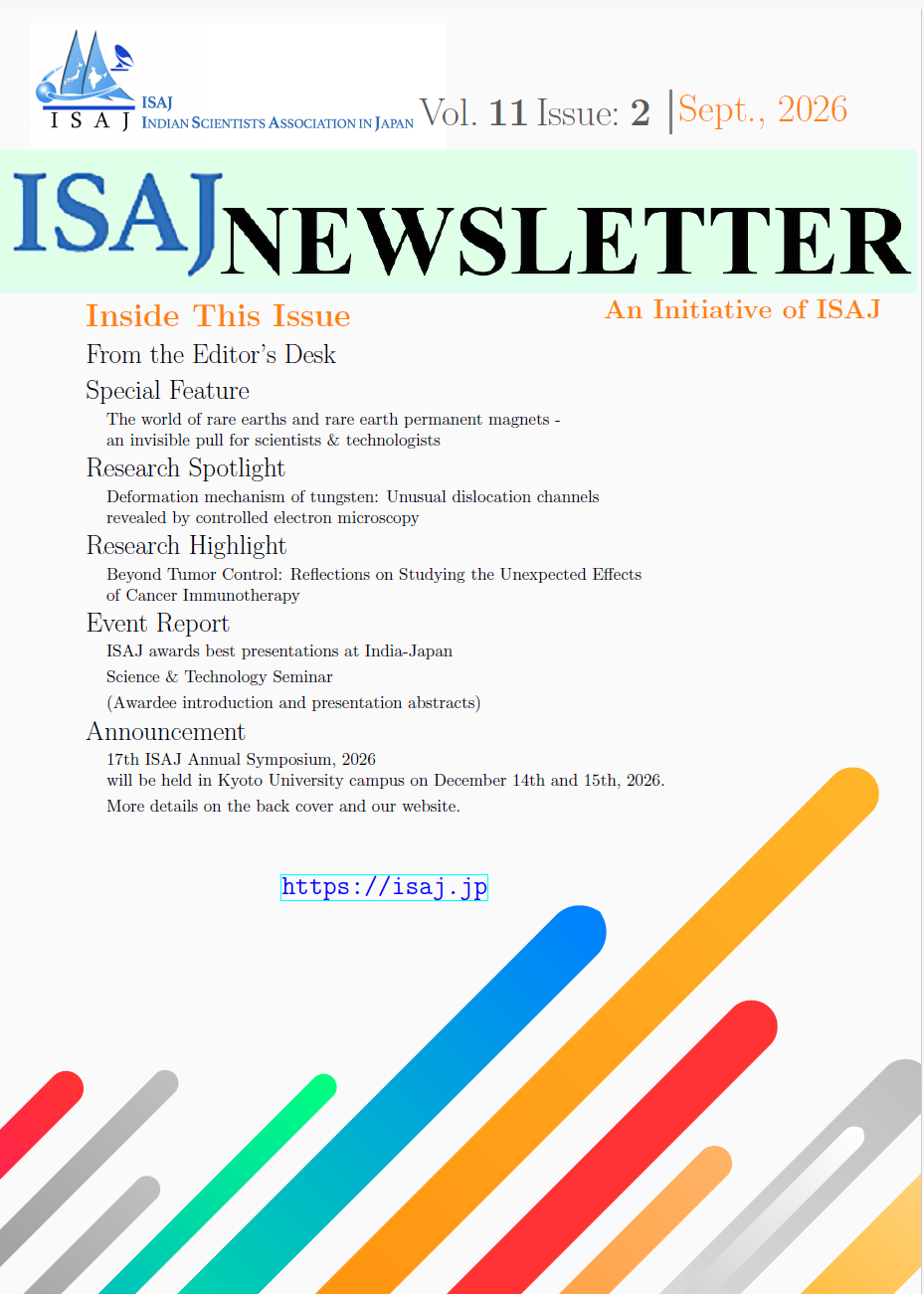
A special feature on permanent earth magnets (a subject of fierce competition for technology, resources and geopolitics), two excellent research articles on two diverse topics - both for Ph.D., both won best presentation award at ISAJ Annual Symposium 2025 held in Shizuoka city in November 2025. In addition, we have a report on young presenters in a science and technology seminar awarded by ISAJ
Important takeaways and highlights from this issue
A special feature on permanent earth magnets.
The discovery, science and technology of rare earth permanent magnets, the backbone of modern technological advancement, powering world’s cleanest and most advanced technologies.
Deformation mechanism of tungsten.
Unusual dislocation channels revealed by controlled electron microscopy
Unexpected Effects of Cancer Immunotherapy.
adverse effects of immunotherapy, which arise from excessive or misdirected immune activation
ISAJ presents awards to 10 presenters at an international conference.
self introduction and presentation abstracts (including graphical) of all the awardees
17th ISAJ Annual Symposium.
will be held in Kyoto University on December 14 and 15, 2026
Article Summaries
Below you'll find condensed summaries from our newsletter articles.
To explore complete research details, figures, and references, view the full newsletter.
Announcements & Overview
• 17th ISAJ Annual Symposium 2026: Will take place at the Kyoto University campus on December 14th and 15th, 2026. The theme is “Converging Frontiers: Science and Innovation for Planetary Health,” co-organized with the Japan Science and Technology Agency (JST).
Special Feature: Rare Earth Elements & Magnets
Author: Dr. Gopalan Raghavan (NIMS, Tsukuba).
Core Science: Explains how the unpaired electrons hidden deep within the f-orbital give rare earth elements (like Neodymium) their ultra-strong, resilient magnetic forces.
Applications: Rare earth permanent magnets (REPMs) serve as the backbone for green technologies, such as wind turbines, electric vehicle traction motors, and consumer electronics.
Geopolitics & India’s Strategy: Addresses China’s historical 95% monopoly on production. To build self-reliance, the Indian government approved a Rs. 7,280 crore scheme in November 2025 to develop integrated REPM manufacturing capacity.
Research Spotlight: Nanoscale Plasticity in Fusion Materials
Author: Dr. Florian Tropper (NIMS / Kyushu University).
Discovery: Mechanically induced and captured a rare, channel-like deformation mechanism in pure tungsten using nanoindentation and advanced electron microscopy (ECCI).
Significance: Tungsten is a leading candidate for the plasma-facing wall in nuclear fusion reactors. This discovery provides a controlled laboratory method to study structurally identical material defects caused by severe radiation in extreme reactor environments.
Research Highlight: Unexpected Toxicities of Immunotherapy
Author: Surabhi Raman (Kyoto University, under Nobel Laureate Prof. Tasuku Honjo).
Focus: Investigates systemic immune-related adverse events (irAEs) triggered by cancer immunotherapy (anti-PD-L1 blockade).
Findings: Established the first experimental model of anti-PD-L1-induced Disseminated Intravascular Coagulation (DIC)—a severe, life-threatening blood-clotting disorder—to study how excessive immune activation affects whole-body vascular and tissue homeostasis.
Event Report: Best Presentation Awards (ICATS-FHM 2026)
ISAJ sponsored awards for young researchers at the International Conference on Advanced Technologies for Sustainable Food, Health, and Materials held at Hokkaido University. The 10 award-winning research projects include:
Environmental Health: Ayaka Yasuda’s study linking plastic chemical (phthalate) exposure to altered cell membrane lipids in school children.
Advanced Materials: Aakash Singh’s work on engineering safer, more stable hybrid perovskite nanocrystals for future optoelectronics.
Green Sunscreens: Phennapha Saokham’s encapsulation of purple sweet potato antioxidants to serve as natural, stable UV-boosters.
Eco-Packaging: Kumari Suraksha’s conversion of agricultural waste (millet bran) into active, biodegradable food packaging film.
Cancer Therapeutics: Siddhartha Das Pramanik’s development of biocompatible honey-loaded nanoparticles that trigger programmed cell death in prostate cancer cells.
Diabetes Treatment: Mitiksha Gupta’s engineering of beneficial gut bacteria (Lactobacillus) to deliver molecules that reduce chronic inflammation in Type 2 Diabetes.
Nutritional Lipidomics: Shujin Li’s targeted profiling of essential fatty acids across 10 culinary and medicinal oils.
Marine Ecology: Nishu’s research mapping the changing bacterial microbiomes across the life cycle of agar-producing red seaweed.
Fatty Liver Countermeasures: Sahana Amai’s isolation of a selective, natural enzyme inhibitor from paprika targeting fatty liver disease and obesity.
AI Diagnostics: Rosemary Edwin’s deep learning model (RF-DETR-Nano) capable of detecting the Leptospira pathogen from microscopy images with 90% accuracy.
Want to read the complete articles?
Access the full newsletter with detailed research, figures, and references.
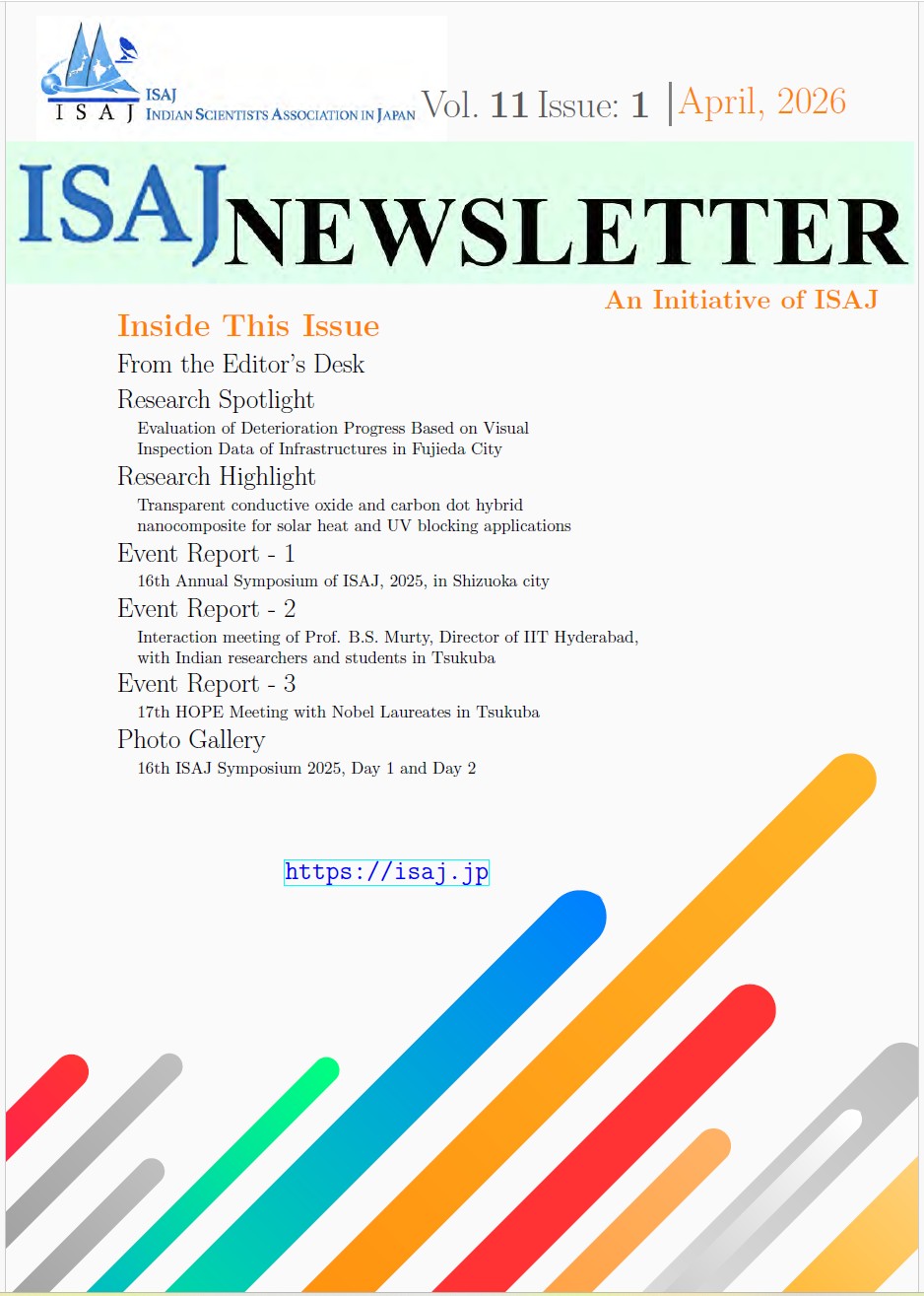
Marks 10 years of ISAJ Newsletter publication, featuring research on bridge deterioration analysis in Fujieda City, transparent conductive oxide and carbon dot nanocomposites for solar heat and UV blocking, and event reports from the 16th ISAJ Symposium, Prof. B.S. Murty's Tsukuba interaction, and the 17th JSPS HOPE Meeting.
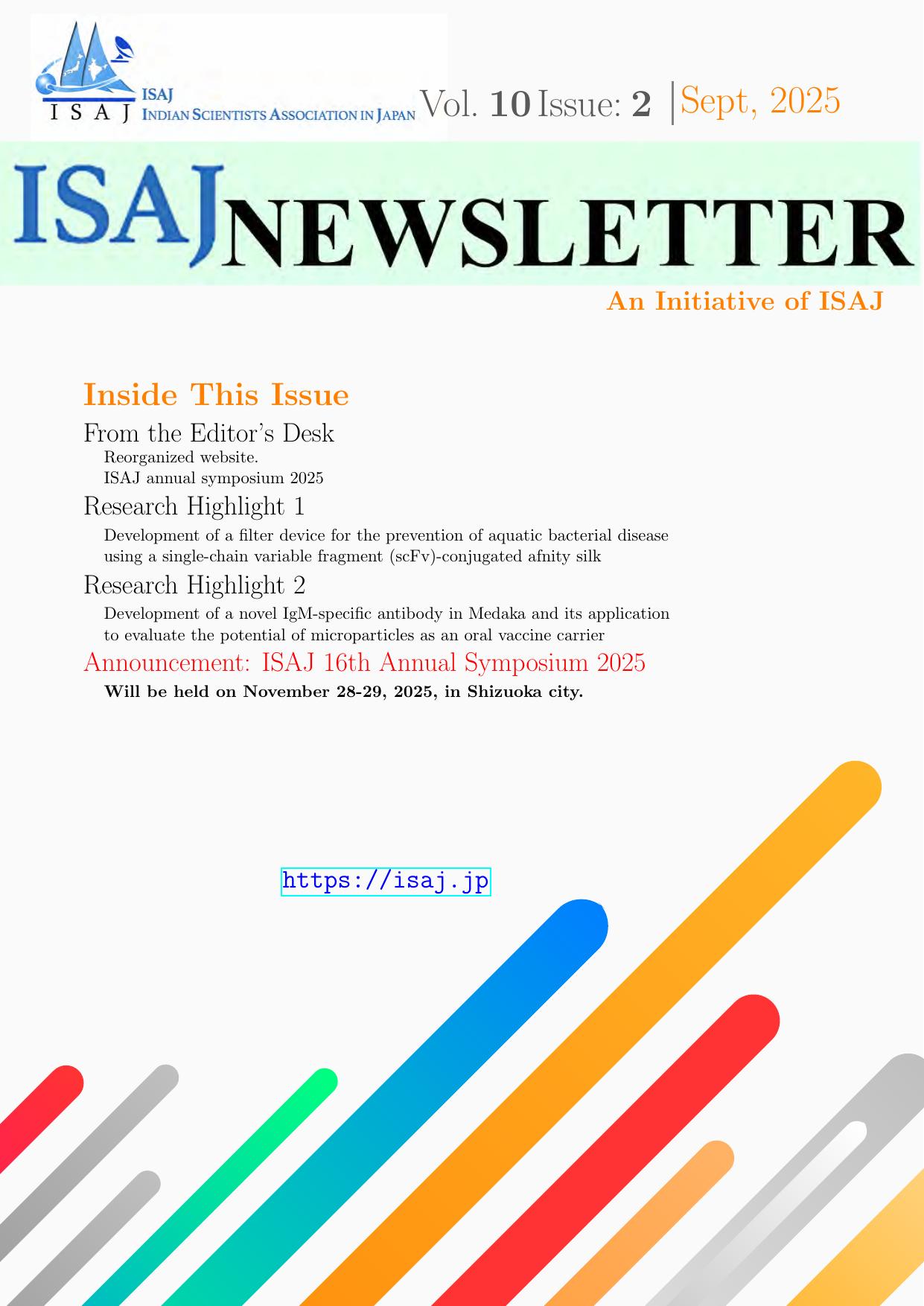
Features research on aquatic bacterial disease prevention using affinity silk filters, IgM-specific antibodies in Medaka for vaccine development, and ISAJ 16th Symposium announcement
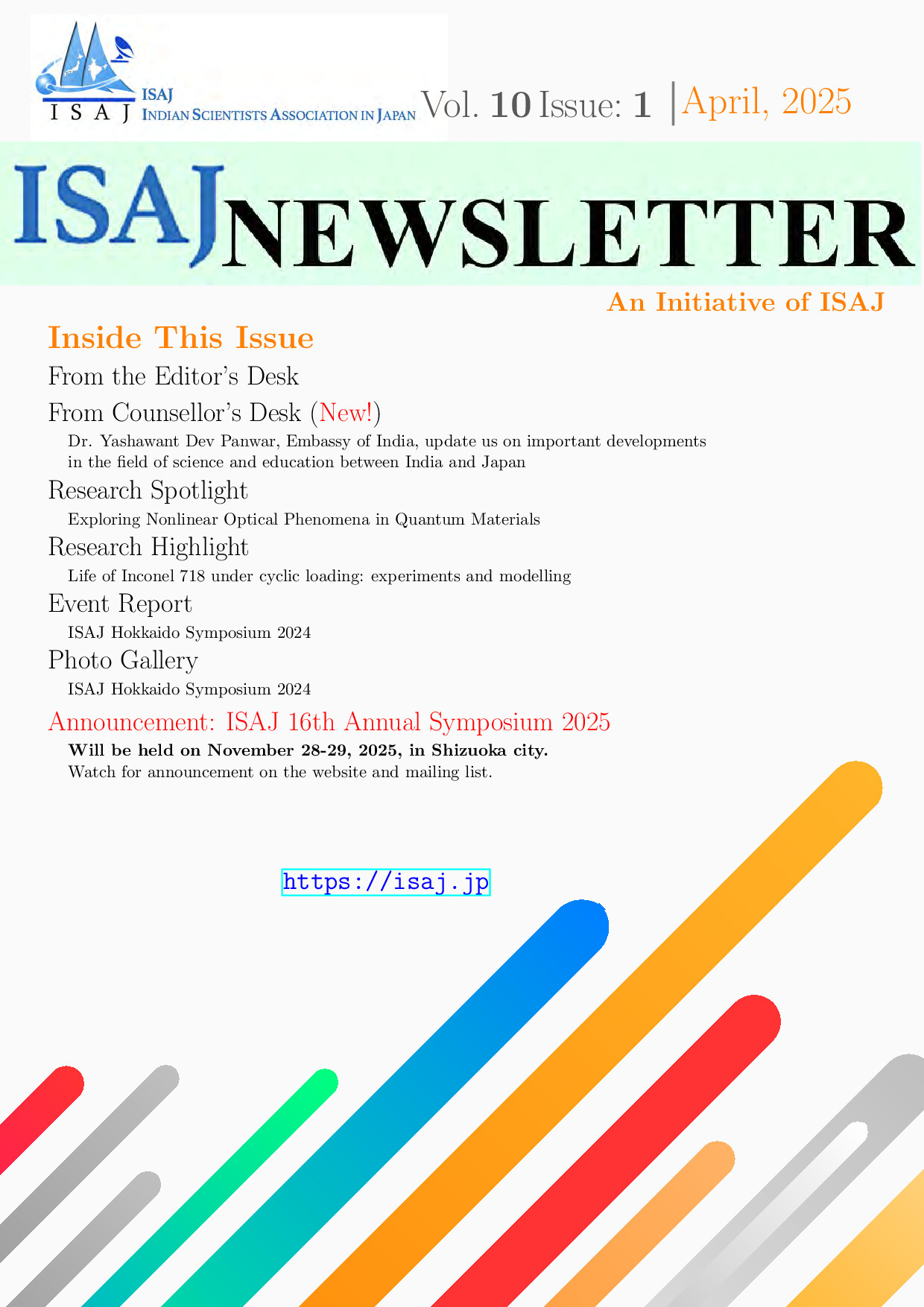
Features India-Japan STI Exchange Year, nonlinear optical phenomena in quantum materials, Inconel 718 fatigue modeling, and ISAJ Hokkaido Symposium 2024
Loading search index
Please wait while we prepare search...
No results found
We couldn't find anything with that term. Please
try again.